


Deciding to transition out of bakery ownership is a major step for an independent baker, custom-cake studio operator, or food-retail owner. After years of early morning production, customer orders, supplier coordination, and signature recipes, stepping away requires careful orchestration. One critical part of that process is maintaining confidentiality. If word spreads prematurely that a bakery is for sale, key decorators may become concerned about their roles, wholesale clients may worry about continuity, and customers with pending event orders may become unsettled. A quiet, orderly transfer process helps the owner protect both daily operations and business value.
Protect Confidential Sale Discussions From Day One
For a retail or wholesale bakery, confidentiality supports a stable sale process. A loss of employee confidence or a major account reacting to rumors can make a buyer more cautious. An experienced intermediary can serve as a buffer between the seller and the market by using a blind profile that describes financial performance, general scale, and broad operating area without disclosing the business name, identifying location, or recognizable photos.
An Indiana bakery owner who needs a confidential process may seek out professional help with a business sale before sharing sensitive operating information. The useful question is whether a prospective adviser has a method for qualifying buyers and controlling when identifying details are disclosed. That allows the owner to keep focused on running the bakery while legitimate prospects are evaluated away from the sales counter.
Standardize Recipes and Production Records

A bakery’s transferable value includes more than ovens and display cases. Buyers also need confidence that the operation can reproduce the products and service standards that keep customers returning. Owners can reduce that uncertainty by translating key recipes from informal habits into clear weight measurements, batch sizes, production steps, and quality checks. A recipe book should be treated as an operating record, not merely a collection of ideas.
Daily production procedures matter as well. A buyer benefits from a factual schedule showing mixing times, proofing windows, oven rotations, packing routines, opening tasks, closing tasks, and the roles responsible for each handoff. Organized procedures do not guarantee that an operator will perform the same way, but they make it easier to see where the bakery depends on a single person’s memory and where the process can be taught.
Plan for Customer-Order Continuity
Custom-cake studios and high-volume bakeries may have a substantial backlog of future orders and deposits. A buyer will want to understand what has been promised, what revenue has been collected, what ingredients or labor remain to be supplied, and how customer expectations will be handled through a transition. Sellers should organize customer agreements, event dates, deposits, design notes, fulfillment calendars, and any practical policies for changes or cancellations.
The owner can also prepare a transition plan for long-lead orders before entering the market. That plan should distinguish between information needed for buyer diligence and customer communication that should wait until a transaction is complete. A well-organized order file helps show that future work is manageable without exposing sensitive details too early in the sale process.
Document Suppliers and Equipment Maintenance
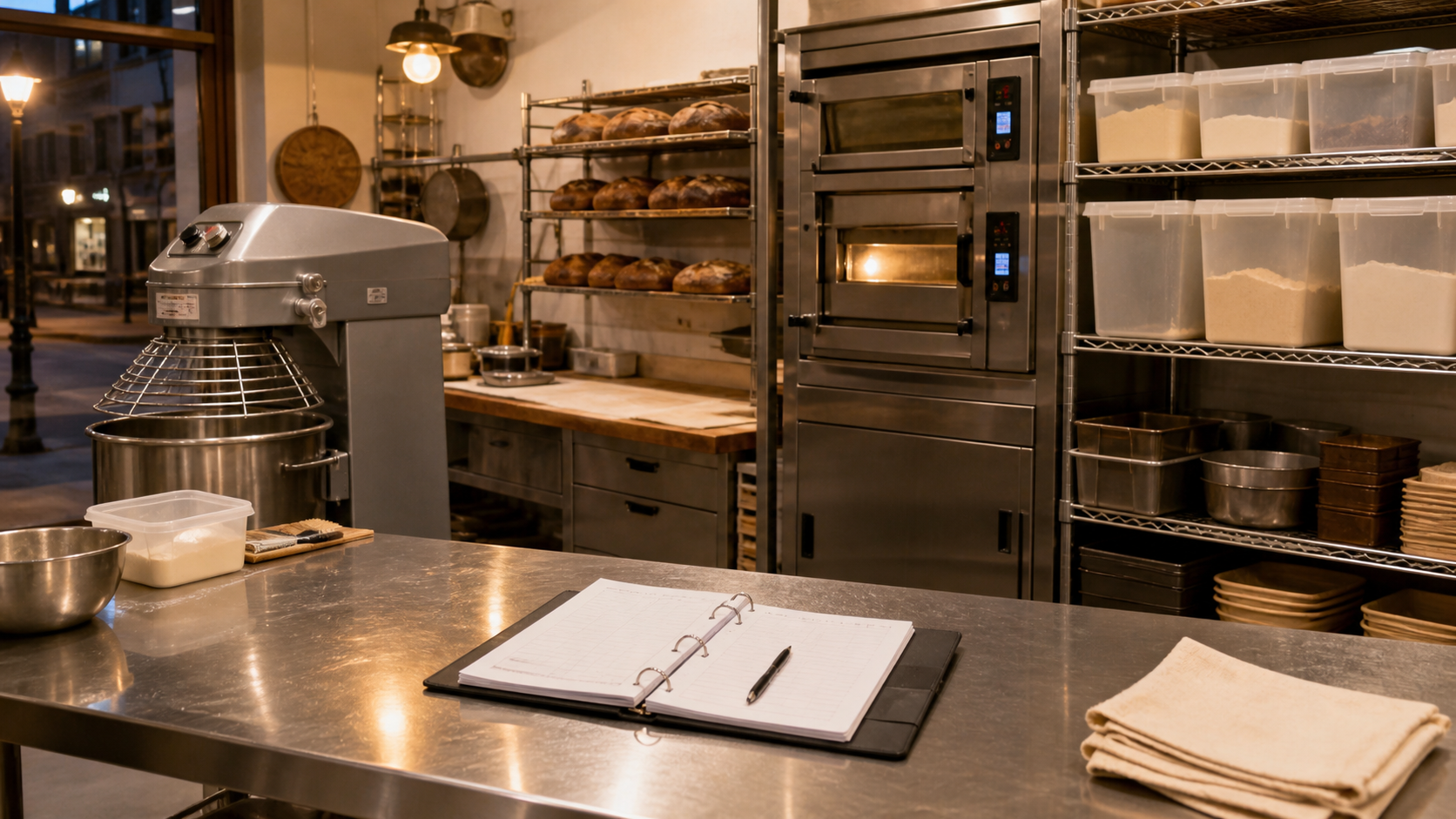
A functioning bakery relies on dependable suppliers and specialized commercial equipment. Preparing for a confidential sale includes compiling a supplier index for core ingredients, packaging, cleaning services, and other recurring purchases. The index can record normal ordering cycles, minimums, delivery timing, payment expectations, and any active agreements. It should not assume that every supplier relationship transfers unchanged; it should give the buyer a realistic operating map and a clear set of follow-up questions.
Equipment records matter just as much. Spiral mixers, dough sheeters, proofers, walk-in coolers, and deck ovens can represent meaningful operating risk if maintenance is undocumented. Recent service records, warranties, repair invoices, and an equipment inventory help a buyer assess condition and understand likely next steps. A complete record can prevent an avoidable negotiation dispute caused by uncertainty about a major asset.
Screen Buyers Before Sensitive Details Leave the Bakery
The human side of a bakery sale is often the most delicate. Employees may not know about the potential ownership change until the appropriate point in the process, yet a buyer will need enough information to evaluate the business. Sellers should decide in advance which records can be summarized anonymously, which documents require a nondisclosure agreement, and when more detailed information can be released.
Buyer screening helps keep that staged process credible. Before identifying information or detailed operational records are shared, a seller can ask whether the prospective buyer has relevant experience, a serious acquisition objective, and a reasonable ability to fund a transaction. The goal is not to make claims about a buyer’s certainty; it is to avoid distributing confidential information widely to people who have not demonstrated a legitimate reason to receive it.
Use a Sale-Readiness Checklist to Keep the Handoff Orderly
A practical checklist helps the owner prepare without turning the bakery into a document project. It can cover current financial statements, the recipe and procedure book, the commercial lease and assignment terms, equipment records, supplier information, order backlog, customer deposits, employee-role documentation, and a realistic training plan. Each item should identify whether it is ready for review, needs an update, or should remain confidential until a later stage.
That checklist should also record unresolved items, such as an upcoming equipment repair, a lease renewal decision, or a key employee whose role needs to be documented more clearly. Presenting both completed and open work gives a buyer a useful diligence roadmap and helps the seller avoid overstating readiness. By preparing these records before a confidential sale begins, a bakery owner can reduce disruption, protect operating continuity, and approach the transition with a clearer plan.
0 Comments